


У сучасному освітньому середовищі цифрові технології дедалі активніше інтегруються в процес викладання та навчання, відкриваючи нові можливості для взаємодії, творчості та розвитку мовних компетентностей. Водночас ефективне використання таких інструментів потребує певної підготовки та професійного розвитку викладачів.
Саме з цією метою в межах проєкту розроблено курс «Digital Methods in Language Teaching» / «Цифрові методи у викладанні мови», який успішно пройшов етап пілотування з 16 лютого по 10 червня 2026 року.
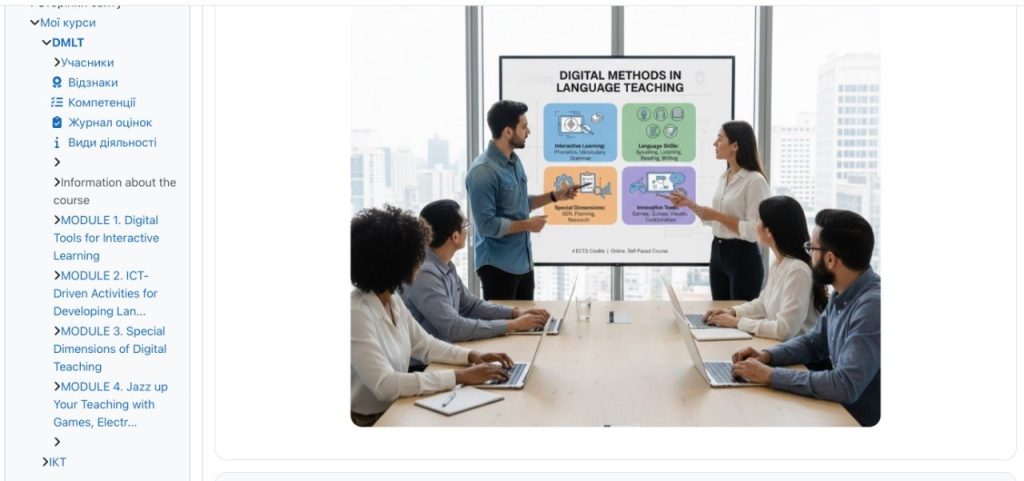
На участь у курсі зареєструвалися 265 учасників, зацікавлених у вдосконаленні власних цифрових компетентностей та пошуку нових підходів до викладання мов. Програма курсу поєднувала теоретичні засади та практичні інструменти, що можуть бути використані в сучасному освітньому процесі.
Учасники ознайомилися з чотирма тематичними модулями:
- Digital Tools for Interactive Learning;
- ICT-Driven Activities for Developing Language Skills;
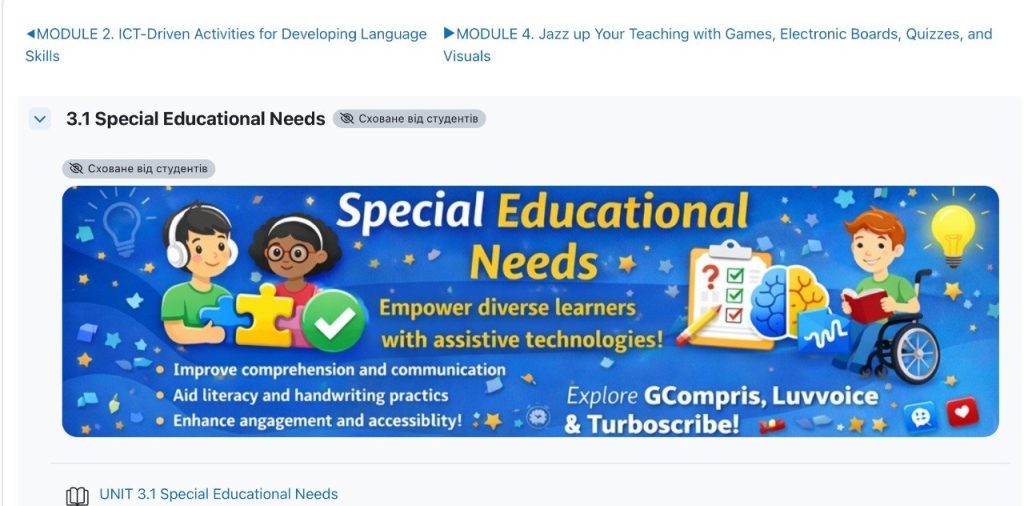
- Special Dimensions of Digital Teaching;
- Jazz up Your Teaching with Games, Electronic Boards, Quizzes, and Visuals.
У межах курсу викладачі досліджували можливості цифрових інструментів для створення інтерактивного освітнього середовища, вивчали підходи до розвитку мовних навичок із використанням ІКТ, аналізували особливості цифрового викладання та відкривали для себе потенціал ігрових елементів, електронних дошок, вікторин і візуальних ресурсів.
Пілотування курсу стало важливим етапом у реалізації проєкту DigiFLEd та підтвердило актуальність теми цифрової трансформації мовної освіти. Досвід учасників засвідчив готовність викладачів до професійного розвитку, впровадження інноваційних підходів і переосмислення традиційних практик викладання відповідно до потреб сучасних здобувачів освіти.
Пілотування курсу завершилося, проте робота над розвитком цифрових компетентностей викладачів триває. Попереду нові можливості для співпраці, навчання та впровадження сучасних підходів у мовну освіту.
In today’s educational environment, digital technologies are becoming increasingly integrated into teaching and learning processes, opening up new opportunities for interaction, creativity, and the development of language competencies. At the same time, the effective use of such tools requires appropriate training and continuous professional development for educators.
With this objective in mind, the course ‘Digital Methods in Language Teaching’ was developed within the framework of the project. The course successfully completed its pilot phase, which ran from 16 February to 10 June 2026.
A total of 265 participants registered for the course, demonstrating a strong interest in enhancing their digital competences and exploring innovative approaches to language teaching. The course combined theoretical foundations with practical tools that can be effectively applied in contemporary educational settings.
Participants engaged with four thematic modules:
- Digital Tools for Interactive Learning
- ICT-Driven Activities for Developing Language Skills
- Special Dimensions of Digital Teaching
- Jazz up Your Teaching with Games, Electronic Boards, Quizzes and Visuals
Throughout the course, educators explored the potential of digital tools for creating interactive learning environments, examined ICT-based approaches to developing language skills, analysed various dimensions of digital teaching, and discovered the educational value of games, electronic boards, quizzes, and visual resources.
The pilot implementation of the course marked an important milestone in the project and reaffirmed the relevance of digital transformation in language education. Participants’ experiences highlighted teachers’ willingness to engage in professional development, adopt innovative approaches, and rethink traditional teaching practices in response to the evolving needs of today’s students.
Although the pilot phase of the course has now completed, the work on strengthening teachers’ digital competences continues. New opportunities for cooperation, learning, and the implementation of contemporary approaches in language education lie ahead.
Funded by the European Union. Views and opinions expressed are however those of the author(s) only and do not necessarily reflect those of the European Union or the European Education and Culture Executive Agency (EACEA). Neither the European Union nor EACEA can be held responsible for them.